Solution to Reduce Material Loss and Control Dust at Transfer Points
Focus-Engineering
15:46 10/04/2026
In industrial bulk material handling systems, transfer points are often “black spots” that cause material loss and fine dust emission, directly leading to revenue leakage and driving up equipment maintenance costs. A comprehensive control solution at the source—through the synchronous combination of optimized chute design, multi-layer skirting systems, impact cradles, and modern dust suppression technology—not only eliminates up to 99% of material spillage but also maximizes conveyor belt lifespan. This is the key to helping businesses optimize operational efficiency, ensure absolute labor safety, and strictly comply with current international environmental standards.
When Every Tonne Counts
The cost of losing material just tripled.
Urea is trading above USD 660 per metric tonne. Wheat is climbing past USD 300. Potash, DAP, ammonium sulphate — all up 25–40% since the Strait of Hormuz disruptions began. Energy costs are driving input prices to levels not seen since 2022. At these prices, the dust coming off your transfer point is no longer a nuisance. It is a line item.
The numbers your CFO hasn’t calculated
Industry data indicates that fugitive material losses at conveyor transfer points range from less than 0.1% at world-class facilities to 3% at poorly maintained operations (Martin Engineering, Australian Bulk Handling Review). Fertiliser engineering firms typically use 1% as a working estimate for transfer point losses (FEECO). Your actual loss depends on your facility, your materials, and your current handling method.
At 200 t/h throughput, here is what different loss levels cost you per hour:
Your loss estimate
Urea (USD 660/t)
Wheat (USD 300/t)
Soybean (USD 400/t)
0.25%
USD 330/hr
USD 150/hr
USD 200/hr
0.50%
USD 660/hr
USD 300/hr
USD 400/hr
1.00%
USD 1,320/hr
USD 600/hr
USD 800/hr
2.00%
USD 2,640/hr
USD 1,200/hr
USD 1,600/hr
Based on 200 t/h throughput. Adjust proportionally for your actual flow rate.
Pick the row that matches your operation. Even the most conservative estimate — a quarter of one percent — costs more per month than the equipment costs to install.
That dust doesn’t come back. It settles on equipment, contaminates adjacent stockpiles, blows into the environment, and costs you again in cleanup, compliance, and neighbour complaints.
What if you could stop most of it — mechanically?
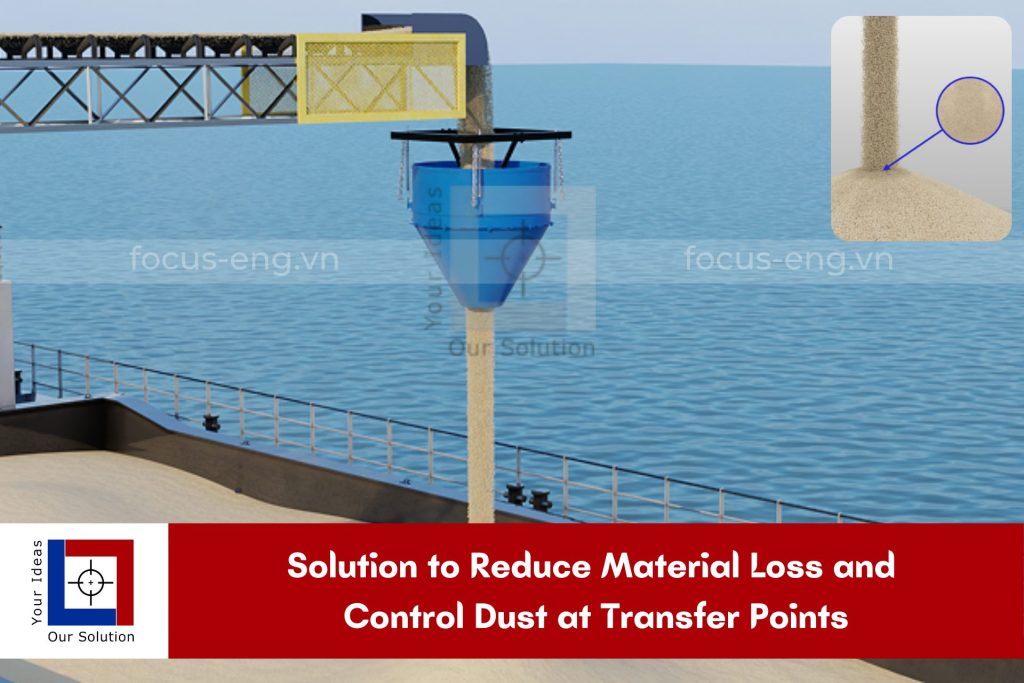
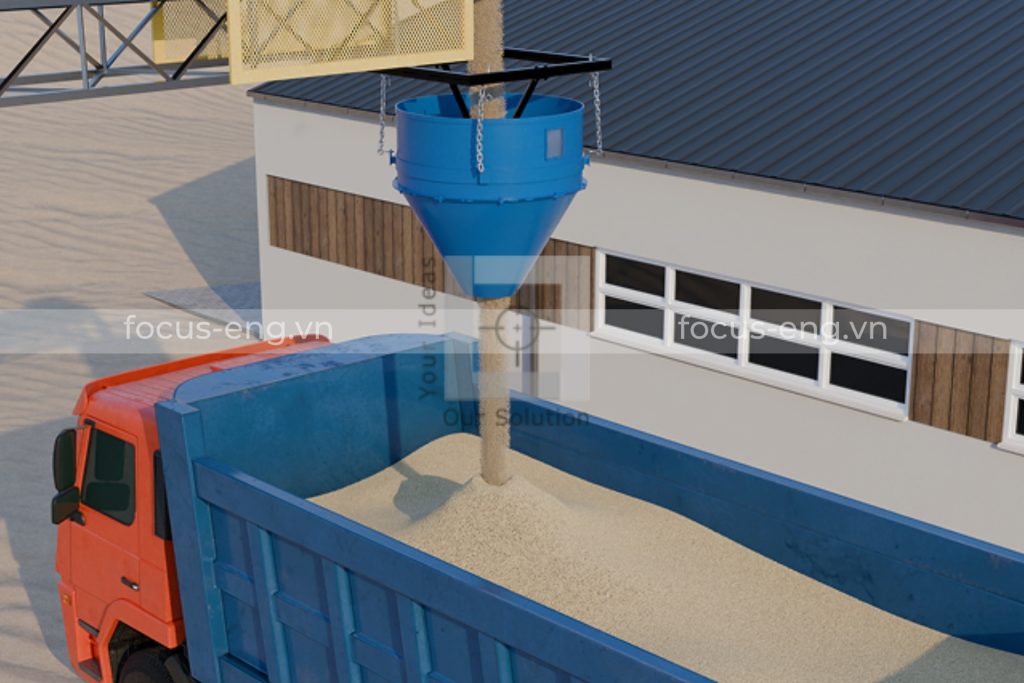
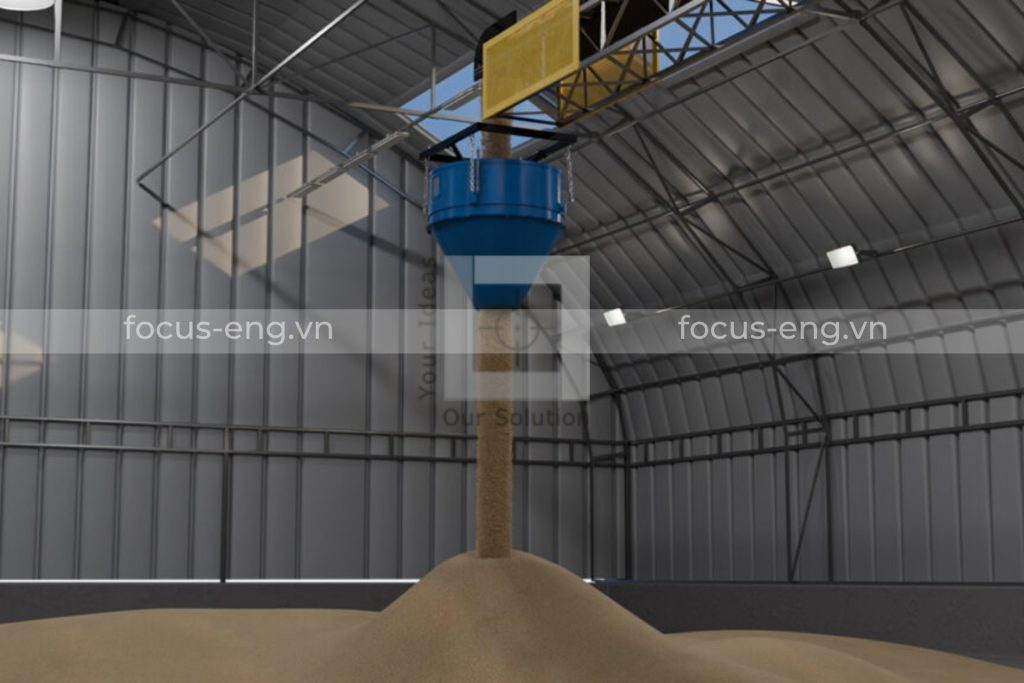
The DustCone hopper discharge system forms a solid column of material from the discharge point to the receiving surface. No free-falling stream. No dispersed particles. No dust cloud.
The system works on a simple principle: the hopper is elastically suspended on springs. As material weight increases, the hopper drops, the annular gap opens, and material flows as a consolidated column — not a shower of particles.
No electrical power. No fans, filters, or extraction ducting. No compressed air. No water spray. No chemical suppressants. No moving parts. No sensors. No control system.
In an environment where industrial electricity is surging with oil and gas prices, this matters. The DustCone operates at exactly zero kilowatt-hours.
The payback calculation
Item
Value
Typical installation cost
USD 15,000 – 45,000 (model dependent)
Material saved per hour (at 0.5% scenario)
1.0 tonne
Value recovered per hour (urea at USD 660/t)
USD 660
Operating hours to payback at USD 25,000 install
38 hours
Operating cost per hour
Zero
At current commodity prices, payback periods are measured in days, not years. The table below uses a mid-range estimate of 0.5% fugitive loss at 200 t/h.
If commodity prices fall back to pre-crisis levels, the payback extends — but a USD 400/tonne urea price still delivers payback within 60 operating hours. The economics work at any price above USD 200/tonne. Below that, dust loss was never a financial priority anyway.
What this means for your operation
If you handle grain: Wheat dust at USD 300+/tonne is no longer acceptable shrinkage. Your customers are paying more for every tonne — they will notice when it doesn’t arrive.
If you handle fertiliser: At USD 660/tonne urea, even a fraction of a percent in fugitive loss at a single transfer point adds up to more per month than the hopper costs to install. Run the numbers for your facility — we’ll help you.
If you handle minerals: Silica sand, limestone, sulphur, iron ore — prices are all elevated. Dust compliance penalties haven’t decreased. The regulatory pressure plus the commodity price makes this the most economically favourable installation window in years.
Why now — not next quarter
Three things are true simultaneously right now:
1. Commodity prices are at multi-year highs. Every percentage point of dust loss costs more today than it did six months ago. The payback period is at its shortest. Waiting for prices to drop means paying the dust penalty at peak rates while you wait.
2. Energy prices make powered alternatives expensive to run. Dust extraction systems, bag filters, and spray suppression all consume power. Installing a powered dust suppression system today locks you into high operating costs for the life of the equipment. A mechanical system locks you into zero.
3. Supply chains are tightening. Steel, freight, and manufacturing lead times are all extending. Ordering now secures your place in the production queue. Ordering in six months means competing with every other buyer who waited.
Air is one of the most essential conditions for the survival and development of all living organisms on Earth, including humans. However, air pollution has reached alarming levels, especially pollution caused by dust. There are numerous sources of dust generation, with industrial production activities being one of the primary contributors. So, what are the solutions […]
Nowadays, environmental pollution is no longer just a problem for a single country or region; it has become a global issue. The socio-economic development of nations worldwide has significantly impacted the environment, altering human living conditions and making them increasingly worse. Environmental pollution has caused severe consequences, negatively affecting ecosystems, directly impacting human health, and […]
Our country’s industry is developing rapidly. While this brings significant economic benefits, it also leads to increasing environmental pollution. Industrial zones are releasing alarming amounts of dust and emissions into the atmosphere, severely affecting the quality of human living environments. The direct consequences include negative impacts on workers’ health and mental well-being when exposed to […]